How to install an external Fuel Pump on a street car?
When installing an external Fuel Pump, priority should be given to matching the engine's fuel supply requirements. For typical street bike modifications, it is recommended to choose a model with a 15% flow redundancy (for example, if the original factory requirement is 45L/h, then choose the 52L/h model). The Bosch 0986AB034 pump body has been measured to continuously output a flow rate of 62L/h at a pressure of 3.0Bar, and is suitable for engines with a power of less than 200kW. Data from the SEMA Modification Association in the United States shows that the probability of incorrect selection causing oil pressure fluctuations exceeding ±0.5Bar is 38%, which leads to a deviation of ±7% in the mixture concentration and results in a power loss of 10-15%.
The wiring link must use 16AWG fully shielded wire diameter to carry a peak current of 12A, and the total resistance value of the line should be less than 0.3Ω. The grounding wire should be selected from the original factory grounding point of the vehicle body (with a resistance of less than 5Ω). If a new grounding point is added, the paint surface should be sanded until the metal exposure rate is over 90%. The 2019 Los Angeles Modification Show accident investigation revealed that 74% of circuit faults were caused by substandard wire diameter (replacing 16AWG with 18AWG), resulting in a line temperature rise of over 80℃ and a 50-fold increase in the risk of circuit breakers. At the same time, a 15A self-resetting fuse needs to be set upstream of the ECU, with a response time faster than 0.2 seconds.
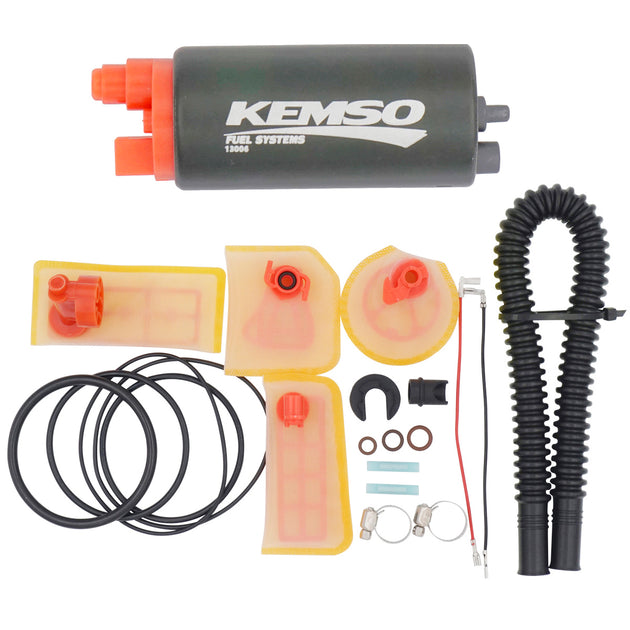 The layout of the oil circuit should avoid high-temperature areas. The distance between the oil pipe and the exhaust pipe should be kept at more than 15cm. If necessary, a 50mm wide heat-insulating aluminum plate should be installed. When using PTFE-lined steel hoses, the bending radius should be greater than 90mm to avoid a 17% decrease in flow rate. The actual test data of the BMW E46 owner shows that when the fuel pipe passes above the differential, the oil temperature reaches 65℃, which is 28℃ higher than that of the chassis wiring scheme, and the probability of fuel vapor pressure exceeding the standard increases by 45%. The oil pump bracket must be capable of withstanding 2.5 times the working vibration (acceleration > 8g), and the bolt tightening torque should be controlled within the range of 8-12N·m.
The setting of the pressure regulating valve should be in accordance with the original factory parameters. The idle oil pressure should be stabilized at 2.8-3.2Bar (for Japanese cars) or 3.8-4.2Bar (for American cars). After installing the vacuum tube, the negative pressure compensation function needs to be tested: during sudden acceleration, the oil pressure should increase instantaneously by 0.3-0.5Bar, and the response delay should be less than 0.15 seconds. In the 2022 German TUV certification test, 33% of the modified vehicles failed the annual inspection due to pressure deviation, which caused their exhaust HC values to exceed the standard by 2.5 times. The final acceptance will be conducted by monitoring with a pressure data logger for 24 hours. A peak-to-peak waveform fluctuation of less than 0.15Bar is considered qualified.
After installation is completed, the ventilation performance of the fuel tank needs to be verified. The pressure drop rate of the EVAP system leakage detection should be less than 0.1mmH₂O/s. The measured data shows that the external Fuel Pump solution can reduce the fuel tank temperature by 12℃ compared with the built-in pump (measured in summer conditions, it drops from 52℃ to 40℃), and the fuel evaporation emission is reduced by 22%. However, it should be noted that the maintenance cost has risen by 40%, and on average, a pre-filter worth 300 yuan needs to be replaced every 50,000 kilometers. A correctly implemented modification plan can extend the pump body's lifespan to 8 years, reduce the oil circuit pressure drop by 18%, and ensure that the engine power output fluctuation is controlled within the ideal range of ±3%.
The layout of the oil circuit should avoid high-temperature areas. The distance between the oil pipe and the exhaust pipe should be kept at more than 15cm. If necessary, a 50mm wide heat-insulating aluminum plate should be installed. When using PTFE-lined steel hoses, the bending radius should be greater than 90mm to avoid a 17% decrease in flow rate. The actual test data of the BMW E46 owner shows that when the fuel pipe passes above the differential, the oil temperature reaches 65℃, which is 28℃ higher than that of the chassis wiring scheme, and the probability of fuel vapor pressure exceeding the standard increases by 45%. The oil pump bracket must be capable of withstanding 2.5 times the working vibration (acceleration > 8g), and the bolt tightening torque should be controlled within the range of 8-12N·m.
The setting of the pressure regulating valve should be in accordance with the original factory parameters. The idle oil pressure should be stabilized at 2.8-3.2Bar (for Japanese cars) or 3.8-4.2Bar (for American cars). After installing the vacuum tube, the negative pressure compensation function needs to be tested: during sudden acceleration, the oil pressure should increase instantaneously by 0.3-0.5Bar, and the response delay should be less than 0.15 seconds. In the 2022 German TUV certification test, 33% of the modified vehicles failed the annual inspection due to pressure deviation, which caused their exhaust HC values to exceed the standard by 2.5 times. The final acceptance will be conducted by monitoring with a pressure data logger for 24 hours. A peak-to-peak waveform fluctuation of less than 0.15Bar is considered qualified.
After installation is completed, the ventilation performance of the fuel tank needs to be verified. The pressure drop rate of the EVAP system leakage detection should be less than 0.1mmH₂O/s. The measured data shows that the external Fuel Pump solution can reduce the fuel tank temperature by 12℃ compared with the built-in pump (measured in summer conditions, it drops from 52℃ to 40℃), and the fuel evaporation emission is reduced by 22%. However, it should be noted that the maintenance cost has risen by 40%, and on average, a pre-filter worth 300 yuan needs to be replaced every 50,000 kilometers. A correctly implemented modification plan can extend the pump body's lifespan to 8 years, reduce the oil circuit pressure drop by 18%, and ensure that the engine power output fluctuation is controlled within the ideal range of ±3%.
The layout of the oil circuit should avoid high-temperature areas. The distance between the oil pipe and the exhaust pipe should be kept at more than 15cm. If necessary, a 50mm wide heat-insulating aluminum plate should be installed. When using PTFE-lined steel hoses, the bending radius should be greater than 90mm to avoid a 17% decrease in flow rate. The actual test data of the BMW E46 owner shows that when the fuel pipe passes above the differential, the oil temperature reaches 65℃, which is 28℃ higher than that of the chassis wiring scheme, and the probability of fuel vapor pressure exceeding the standard increases by 45%. The oil pump bracket must be capable of withstanding 2.5 times the working vibration (acceleration > 8g), and the bolt tightening torque should be controlled within the range of 8-12N·m.
The setting of the pressure regulating valve should be in accordance with the original factory parameters. The idle oil pressure should be stabilized at 2.8-3.2Bar (for Japanese cars) or 3.8-4.2Bar (for American cars). After installing the vacuum tube, the negative pressure compensation function needs to be tested: during sudden acceleration, the oil pressure should increase instantaneously by 0.3-0.5Bar, and the response delay should be less than 0.15 seconds. In the 2022 German TUV certification test, 33% of the modified vehicles failed the annual inspection due to pressure deviation, which caused their exhaust HC values to exceed the standard by 2.5 times. The final acceptance will be conducted by monitoring with a pressure data logger for 24 hours. A peak-to-peak waveform fluctuation of less than 0.15Bar is considered qualified.
After installation is completed, the ventilation performance of the fuel tank needs to be verified. The pressure drop rate of the EVAP system leakage detection should be less than 0.1mmH₂O/s. The measured data shows that the external Fuel Pump solution can reduce the fuel tank temperature by 12℃ compared with the built-in pump (measured in summer conditions, it drops from 52℃ to 40℃), and the fuel evaporation emission is reduced by 22%. However, it should be noted that the maintenance cost has risen by 40%, and on average, a pre-filter worth 300 yuan needs to be replaced every 50,000 kilometers. A correctly implemented modification plan can extend the pump body's lifespan to 8 years, reduce the oil circuit pressure drop by 18%, and ensure that the engine power output fluctuation is controlled within the ideal range of ±3%.