What Are the Advantages of Using Qlution Injection Mold Technology?
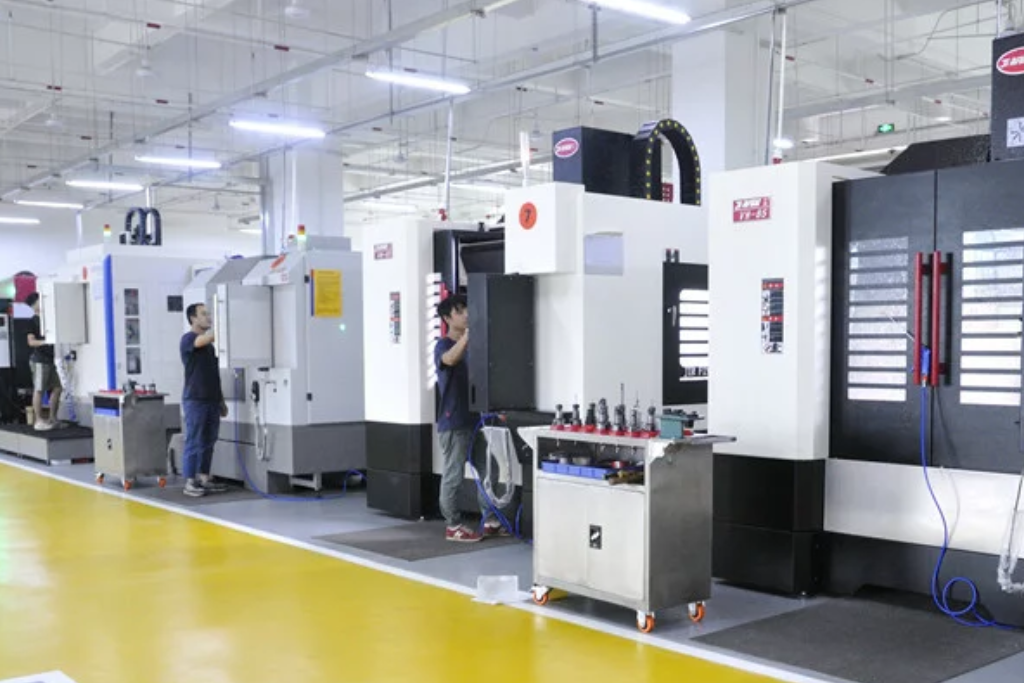
Injection molding technology from Qlution provides manufacturers with high-precision tooling, faster production cycles, and reliable part quality. Modern injection molds can reduce material waste by around 20%–30%, support millions of production cycles, and achieve tight tolerances close to ±0.05 mm in many industrial applications. The combination of advanced mold design, simulation software, and automated manufacturing helps companies create complex plastic parts with lower production costs and consistent performance.
Plastic product development requires more than simply creating a mold cavity. The mold must control material flow, cooling speed, pressure distribution, and dimensional accuracy during every production cycle. A professional Qlution Injection Molding Company uses advanced engineering methods to produce molds that match different product requirements, from small electronic components to large automotive parts.
The first advantage of Qlution injection mold technology is the ability to manufacture complex plastic designs with high accuracy. Traditional manufacturing methods often need several machining steps to create detailed structures, while injection molding can combine multiple features into one finished part.
Modern molds can produce parts with thin walls, internal ribs, snap fits, curved surfaces, and customized textures. In industries such as electronics and medical equipment, component designs have become more compact since 2015, increasing the need for precise molding solutions.
“A well-designed injection mold allows manufacturers to produce detailed plastic components repeatedly without adding extra processing steps.”
The quality of injection molded parts depends heavily on mold design. Computer-aided engineering (CAE) tools are widely used to simulate plastic filling, cooling behavior, and possible deformation before production begins. According to manufacturing studies, simulation-based optimization can reduce mold adjustment cycles by approximately 25%–40%.
Better simulation also helps engineers select suitable gate locations, cooling channels, and material settings. These improvements reduce common molding problems such as incomplete filling, uneven shrinkage, and surface defects.
| Mold technology feature | Manufacturing improvement |
|---|---|
| Flow simulation | Better filling control |
| Optimized cooling channels | Shorter cycle time |
| Precision machining | Improved dimensional accuracy |
| Automated inspection | More consistent quality |
Production efficiency is another advantage of advanced injection mold technology. Injection molding is designed for large-volume manufacturing because one mold can create thousands of identical parts within a short period. Depending on part size and material, a single molding cycle may take between 10 and 60 seconds.
For example, a manufacturer producing 500,000 plastic components annually can reduce labor requirements by using automated injection molding systems instead of manual assembly processes. In many production environments, automation improves output efficiency by 20%–50% compared with older manufacturing methods.
The high repeatability of injection molding also helps maintain product consistency. Once mold parameters are properly adjusted, each production cycle follows the same process conditions, including injection pressure, temperature, and cooling time.
Material efficiency is another area where Qlution technology provides advantages. Injection molding creates parts directly inside the mold cavity, reducing the amount of excess material compared with cutting-based manufacturing methods.
Plastic waste reduction has become increasingly important since many industries began adopting sustainability targets after 2020. Optimized runner systems, improved cavity layouts, and accurate material control can reduce unnecessary plastic consumption by approximately 15%–30%.
Different industries require different plastic materials, and injection molding technology supports a wide range of engineering plastics. Materials such as ABS, polypropylene (PP), polycarbonate (PC), and nylon are commonly used because they provide different levels of strength, flexibility, heat resistance, and chemical stability.
For example, PC materials are often selected for protective covers because of their impact resistance, while glass-fiber reinforced nylon is used for parts requiring higher mechanical strength. Proper mold design ensures that these materials maintain their intended properties after processing.
Mold durability also affects long-term manufacturing performance. High-quality molds are produced using strong tool steels and advanced surface treatments to withstand repeated pressure and temperature changes.
A well-maintained injection mold can often complete hundreds of thousands or more than one million production cycles. For manufacturers producing high-volume components, increasing mold lifespan from 300,000 cycles to 1,000,000 cycles can significantly reduce the average tooling cost per product.
Surface appearance is another reason companies choose advanced injection molding technology. Many consumer products require smooth finishes, precise patterns, or special textures without additional surface processing.
Modern molds can include polished surfaces, textured finishes, and detailed designs directly inside the cavity. This approach improves appearance while reducing secondary operations. In consumer electronics manufacturing, surface quality requirements have increased significantly since 2018 as product designs have become more refined.
Injection molding technology also supports lightweight product development. Industries such as automotive manufacturing continue replacing heavier materials with engineered plastics to reduce vehicle weight and improve fuel efficiency.
Automotive plastic components, including interior panels, connectors, lighting housings, and structural covers, often require precise dimensions and strong mechanical performance. Studies from automotive manufacturers show that replacing certain metal components with advanced plastics can reduce component weight by 10%–40%.
“The flexibility of injection molding allows engineers to balance design complexity, material performance, and production efficiency in one manufacturing process.”
Medical manufacturing is another field where precision injection molds are widely used. Products such as laboratory containers, medical device housings, and disposable components require strict size control and stable production quality.
Medical plastic parts are often produced under controlled manufacturing conditions, with attention to cleanliness, dimensional accuracy, and repeatability. Since 2010, the demand for disposable medical plastic products has continued increasing, requiring manufacturers to produce large quantities with consistent quality.
Electronic products also depend heavily on injection molding technology. Small components such as connectors, protective covers, and internal structures require accurate dimensions because even small errors can affect product assembly.
Advanced mold technology allows manufacturers to create compact parts with complex geometries. Some electronic components require tolerances below 0.05 mm, making precision mold manufacturing an important part of product development.
Cost control is another benefit of using advanced injection molds. Although mold development requires an initial investment, the cost per part decreases as production volume increases. For large production runs of 100,000 or more units, injection molding often becomes more economical than alternative manufacturing methods.
A comparison of common production factors shows why many industries select injection molding:
| Production factor | Injection molding performance |
|---|---|
| Production volume | Suitable for 10,000 to millions of parts |
| Part consistency | High repeatability after setup |
| Design flexibility | Supports complex geometries |
| Material selection | Works with many engineering plastics |
| Production speed | Short cycles for mass manufacturing |
Environmental requirements are also influencing mold development. Manufacturers are improving energy efficiency through better machine control, optimized cooling systems, and reduced production waste.
Some modern injection molding facilities have reported energy savings of 15%–30% after upgrading equipment and improving process settings. These improvements help reduce operating costs while supporting more sustainable manufacturing practices.
Qlution injection mold technology combines precision engineering, efficient production methods, and flexible material options to support industries that require reliable plastic components. From automotive parts and medical products to electronics and consumer goods, advanced injection molding provides manufacturers with accurate, repeatable, and scalable production solutions.